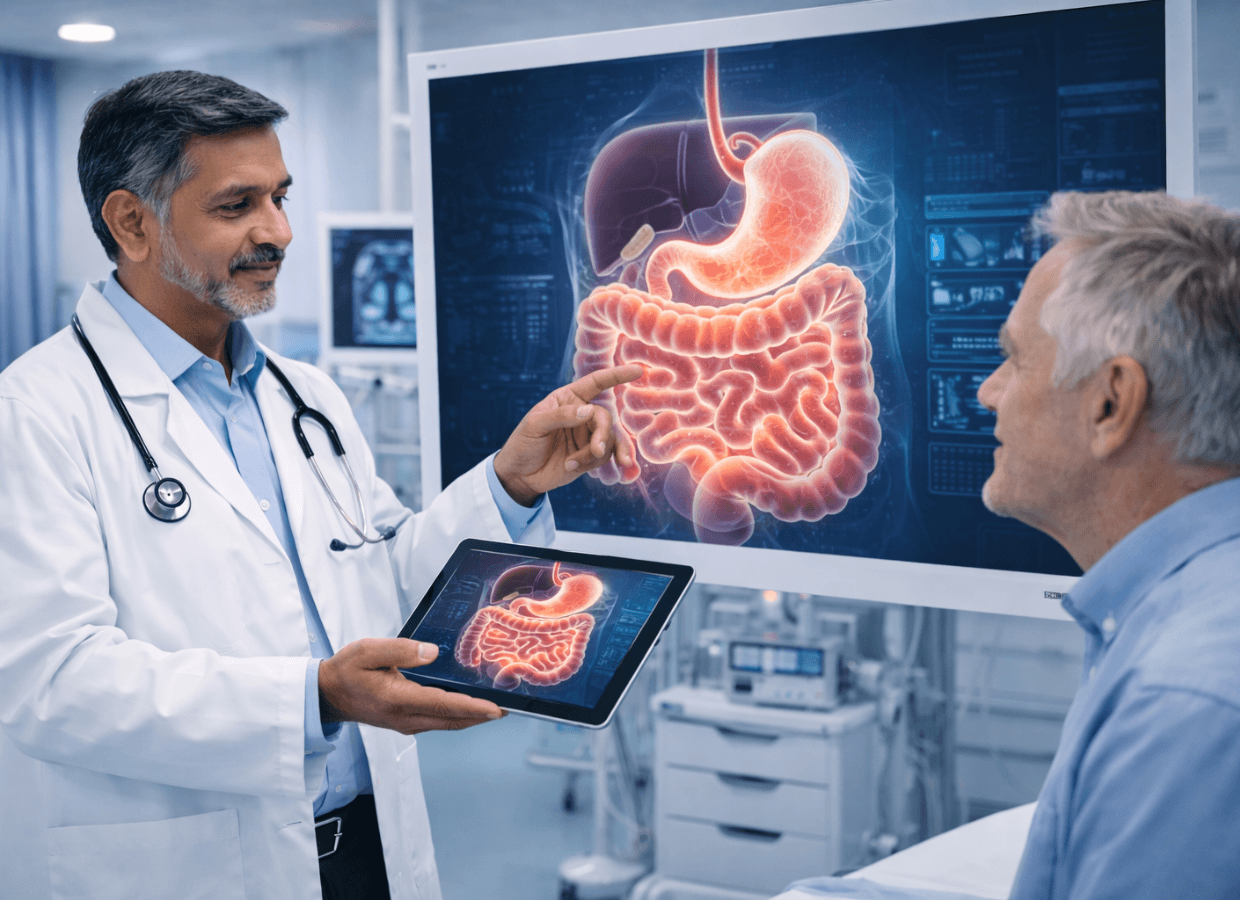

Esophageal Diverticula and Benign Tumor Treatment in India
A pouch in your food pipe or a growth that shouldn’t be there sounds alarming. Most of the time, it isn’t cancer. It’s a mechanical problem that a skilled surgeon can fix. If you’re researching esophageal diverticula treatment in India, we cover what these conditions actually are, how they’re treated, what recovery looks like, and how to plan your trip without guesswork.
What Are Esophageal Diverticula and Benign Esophageal Tumors?
An esophageal diverticulum is a pouch that forms in the wall of the esophagus, the muscular tube that carries food from your throat to your stomach. Food and saliva can collect inside this pouch instead of moving down normally. That’s what causes the regurgitation, bad breath, and coughing many patients describe.
A benign esophageal tumor is a non-cancerous growth in or on the esophageal wall. The most common one is a leiomyoma, which grows from the smooth muscle layer. Others include fibrovascular polyps, cysts, and papillomas. Unlike diverticula, small benign tumors often cause no symptoms at all and are picked up during an unrelated endoscopy.
Why Does This Need Treatment?
Not every diverticulum or tumor needs surgery. But treatment becomes necessary when the condition starts affecting daily life or carries a risk of complications:
Persistent difficulty swallowing (dysphagia)
Food regurgitating back into the mouth, sometimes hours after eating
Repeated chest infections from aspirating food into the lungs
Unexplained weight loss from reduced food intake
Risk of the pouch or tumor growing large enough to compress the esophagus
Left untreated, a large diverticulum can lead to aspiration pneumonia, and a growing benign tumor can eventually block the swallowing passage entirely.
Types of Esophageal Diverticula and Benign Tumors
Zenker’s diverticulum – The most common type. It forms at the junction of the throat and esophagus, through a naturally weak spot in the muscle wall. It’s often behind the classic symptoms of gurgling, halitosis, and food coming back up undigested.
Mid-esophageal (traction) diverticulum – Forms in the middle third of the esophagus, usually from scarring or inflammation nearby, historically linked to infections like tuberculosis. Many are silent and never need treatment.
Epiphrenic diverticulum – Located near the lower esophagus, just above the diaphragm. It’s frequently linked to an underlying swallowing-muscle disorder, so treatment usually addresses both the pouch and the motility problem together.
Leiomyoma – The most common benign esophageal tumor, arising from the muscle layer.
Other benign growths – Fibrovascular polyps, esophageal cysts, papillomas, and small hemangiomas.
Symptoms That Should Prompt an Evaluation
Difficulty or discomfort swallowing solids or liquids
Regurgitation of undigested food, particularly at night
A gurgling sound in the throat when swallowing
Persistent bad breath with no dental cause
Chronic cough or recurring chest infections
A feeling of fullness or a lump in the throat
Unintentional weight loss
If you’re experiencing several of these together, it’s worth getting an endoscopy and a barium swallow study before symptoms progress.
Who Is the Right Candidate for Surgery?
Surgery is generally recommended for patients with symptomatic diverticula, tumors larger than 2-3 cm, growths causing swallowing difficulty, or any lesion where imaging can’t fully rule out something more serious. Small, silent tumors and tiny traction diverticula are often just monitored with periodic endoscopy instead.
How Is the Procedure Performed?
Esophageal diverticula treatment in India depends on the type and location of the problem:
Diagnosis first – Barium swallow, upper endoscopy, and sometimes endoscopic ultrasound or manometry to map the exact problem.
Anesthesia – Nearly all approaches use general anesthesia.
For Zenker’s diverticulum – Either an endoscopic stapling procedure (done through the mouth, no external incision) that divides the wall between the pouch and the esophagus, or an open neck surgery combining diverticulum removal with a muscle-cutting procedure called cricopharyngeal myotomy.
For epiphrenic diverticula – Minimally invasive thoracoscopic or laparoscopic diverticulectomy, usually paired with a myotomy to correct the underlying motility issue.
For benign tumors like leiomyoma – Enucleation, where the surgeon carefully shells out the tumor while keeping the esophageal lining intact, typically done through small keyhole incisions.
Post-procedure – A swallow study confirms there’s no leak before you’re allowed to eat or drink.
Benefits of Esophageal Diverticula Treatment in India
Relief from dysphagia and food regurgitation
Lower risk of aspiration pneumonia
Better nutrition and weight stabilization
Removal of a growth before it enlarges further
Noticeable improvement in day-to-day quality of life
Risks and Complications
As with any esophageal procedure, possible risks include:
bleeding,
infection,
a leak at the surgical site,
temporary voice changes (with neck surgery for Zenker’s), stricture formation,
and, rarely, recurrence of the pouch.
Therefore, choosing an experienced surgical team lowers these risks considerably.
Recovery Timeline
Week 1 – Hospital stay of 2 to 6 days depending on the approach; liquid or soft diet; gradual pain reduction.
Month 1 – Return to a near-normal diet; most patients resume light daily activity within 2 to 3 weeks.
Month 3 – Full recovery for most patients, with normal swallowing function and a follow-up endoscopy to confirm healing.
Esophageal Diverticula Treatment Cost in India
Affordable, high-quality medical care is the primary reason so many families choose esophageal diverticula treatment in India. The cost typically ranges from USD 3,500 to 9,000, depending on whether the approach is endoscopic or open, the hospital’s location, and the length of stay. Your final quote depends on your specific diagnosis.
What affects the cost:
Endoscopic vs. open or thoracoscopic surgery
Length of hospital stay
City and hospital tier
Need for a combined myotomy procedure
Pre-surgery diagnostic workup
Best Hospital for Esophageal Surgery in India
Curebridge works with a network of NABH and JCI-accredited centers experienced in advanced gastrointestinal and thoracic procedures, including:
Manipal Hospitals
Gleneagles Global Hospital, Chennai
Medicover Hospitals
Peerless Hospital & B.K. Roy Research Center
Max Healthcare
Saifee Hospital
PACE Hospital
Lokmanya Hospital
You can view the complete list of partner hospitals here.
Why Choose India for This Treatment?
India combines high surgical volumes with modern minimally invasive equipment, English-speaking medical staff, and significantly lower costs than Western countries. Many centers here handle a wide caseload of complex esophageal conditions, which keeps surgical teams sharp and experienced. Add shorter waiting times compared to countries with long public healthcare queues, and it becomes clear why international patients increasingly choose esophageal benign tumor treatment in India and diverticulum surgery here over treatment at home.
Why Choose Curebridge?
Planning surgery from another country comes with real logistics to sort out. Curebridge handles the parts patients usually struggle with on their own:
A free medical opinion on your case before you commit
Visa assistance and documentation support
Airport pickup on arrival
A translator for consultations and hospital visits, where needed
Accommodation arrangements for you and any accompanying family
Structured follow-up after you return home
If you’re weighing your options for esophageal diverticula treatment in India, this kind of end-to-end coordination is often what separates a smooth trip from a stressful one.
For related conditions affecting the digestive tract, you can also read more on Gastroenterology Treatment in India.
Next step
Get a free medical opinion
Send your reports and a specialist will confirm whether this procedure suits your case.
Talk to a care advisor
At a glance
Speciality
Gastroentérologie
Condition group
Oesophageal & Upper GI
Reported success rate
Keep exploring
Other treatments performed by the same specialist teams.
Oesophageal & Upper GI
Esophageal Diverticula & Benign Tumours

Hernia Surgery
Inguinal Hernia Repair
Hernia Surgery
Ventral Hernia Repair

Intestinal & Colorectal Surgery
Intestinal Stoma Surgery

Intestinal & Colorectal Surgery
Enteric Fistula & Abdominal Abscess

Abdominal Tumour Surgery
Retroperitoneal Tumour Surgery
Our care team reviews your reports and returns a hospital shortlist with a recommended treatment plan, usually within 24 hours.
Talk to a care advisor
What is an esophageal diverticulum?
It's a pouch that forms in the wall of the esophagus, where food or saliva can collect instead of passing normally into the stomach.
What is the most common type of esophageal diverticulum?
Zenker's diverticulum, which forms near the junction of the throat and esophagus, is the most frequently diagnosed type.
What is the most common benign tumor of the esophagus?
Leiomyoma, a growth arising from the smooth muscle layer of the esophageal wall, is the most common benign esophageal tumor.
Is a benign esophageal tumor cancerous?
No, by definition a benign tumor is non-cancerous. Your surgeon will still confirm this through imaging and, where appropriate, targeted evaluation before deciding on treatment.
What symptoms suggest I should look into esophageal diverticula treatment in India?
Difficulty swallowing, regurgitation of undigested food, chronic cough, bad breath without a dental cause, and unexplained weight loss are the main warning signs.
How is esophageal diverticulum surgery in India typically performed?
Depending on the type and location, it's done either endoscopically through the mouth or through minimally invasive keyhole surgery, sometimes combined with a muscle-cutting procedure to address an underlying swallowing disorder.
Is the surgery safe, and what results can I expect?
These are well-established procedures with a long track record. Most patients report significant relief from swallowing symptoms, though as with any surgery, individual outcomes depend on your specific case and overall health.
What is the esophageal diverticula treatment cost in India?
It generally falls between USD 3,500 and 9,000, depending on the surgical approach, hospital, and length of stay. Get an exact figure through a personalized consultation.
How long is the recovery after surgery?
Most patients return to a normal diet within a month and reach full recovery by around three months, though this varies by procedure type.
Can international patients travel to India for this treatment, and how do I get started?
Yes, India regularly treats international patients for esophageal conditions. You can book a free consultation for esophageal treatment through Curebridge to get a diagnosis review, hospital recommendation, and cost estimate before you travel.